The Funding Gap Facing Dalit, Bahujan and Adivasi-Led Nonprofits
Under-funding, lack of reserves and an inability to build operating surpluses fall hardest on nonprofits led by historically marginalised groups.
Who Bears the Weakness
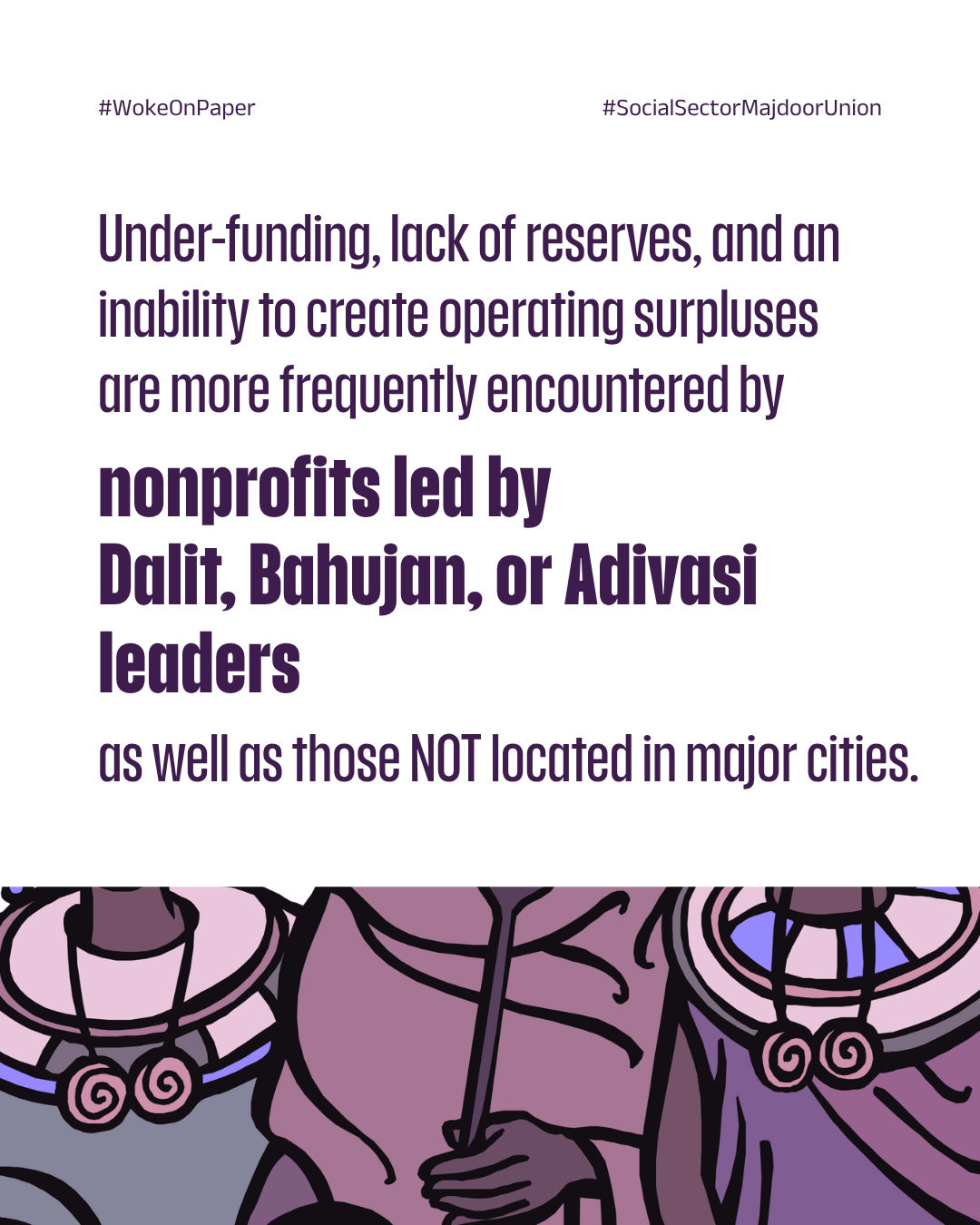
Under-funding, lack of reserves, and an inability to create operating surpluses are more frequently encountered by nonprofits led by Dalit, Bahujan or Adivasi (DBA) leaders — as well as those not located in major cities.
70% of DBA-led nonprofits reported no reserve funds, a sign of particularly acute financial weakness for these historically marginalised groups.
What Funders Track — and Don't
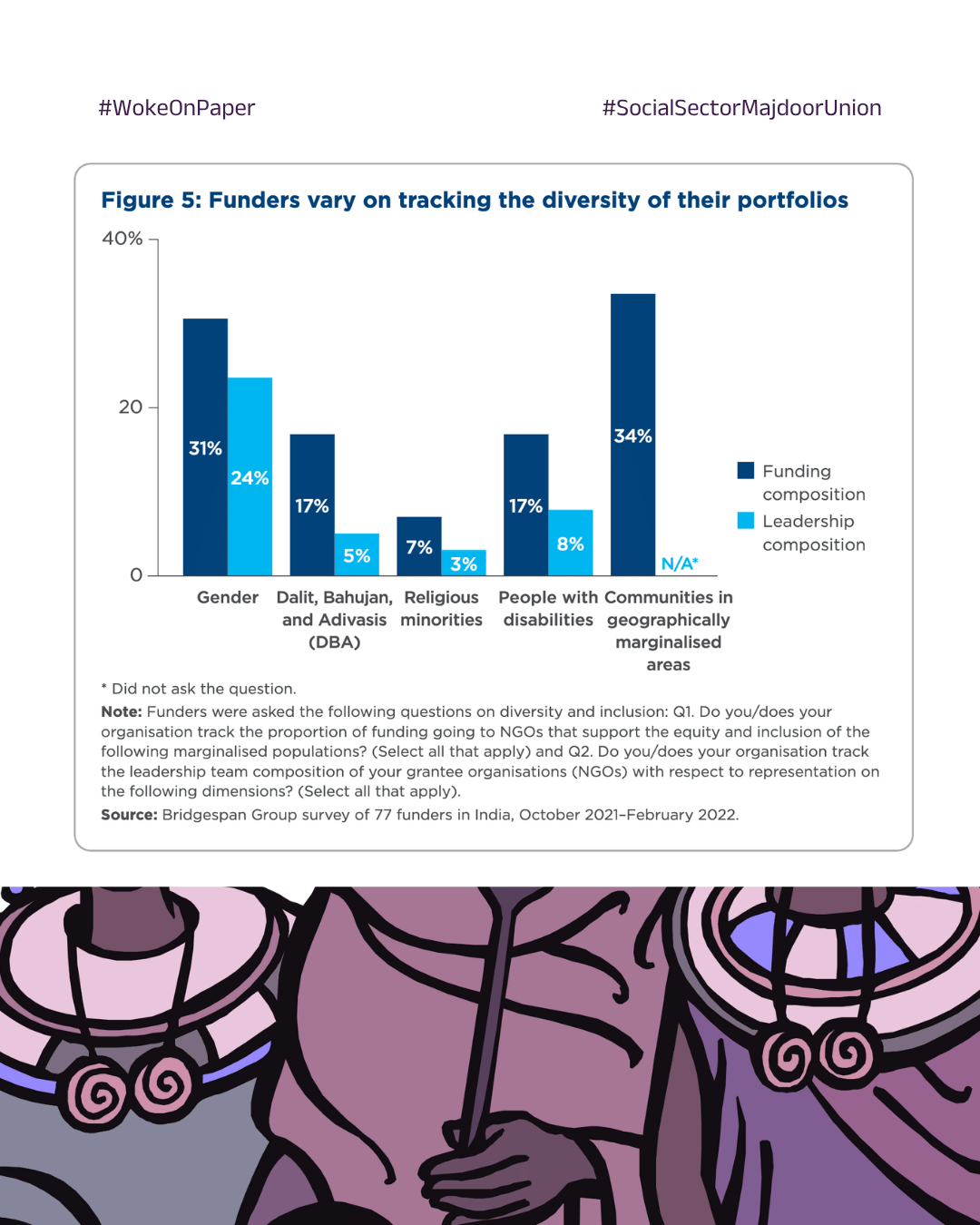
Just 17% of the 77 funders surveyed in India by the Bridgespan Group (2022) — roughly 13 in number — reported tracking the proportion of their funding that goes to nonprofits serving Dalit, Bahujan and Adivasi populations.
Only 5% of the 77 funders surveyed — roughly 4 — reported that they track the leadership composition of their grantee NGOs with respect to DBA representation. (Source: The Bridgespan Group, survey of 77 funders in India, October 2021–February 2022.)
Addressing Systemic Inequities
India has a long history of systemic inequities based on factors such as caste, gender, tribal origin and religion. Nonprofits benefit greatly from having leaders and staff with lived experience of the individuals and communities they serve. This enables them to take into account the distinctive strengths and needs of diverse, historically marginalised communities, helping design more effective programmes that address the root causes of social problems.
It is crucial for funders to understand the unique contexts of nonprofit partners who may have faced systemic marginalisation — and to go the extra mile in supporting their organisational development and financial resilience.
WokeOnPaper is an independent satire media collective led by a small group of development practitioners. Through memes, stories and commentary, it reflects on the everyday absurdities of the social sector — nudging it towards becoming more honest, participatory and democratic.