Is the Oxfam GB Turmoil Really About Dr Halima Begum?
Or is it exposing a deeper crisis in nonprofit work culture?
A History Before She Arrived
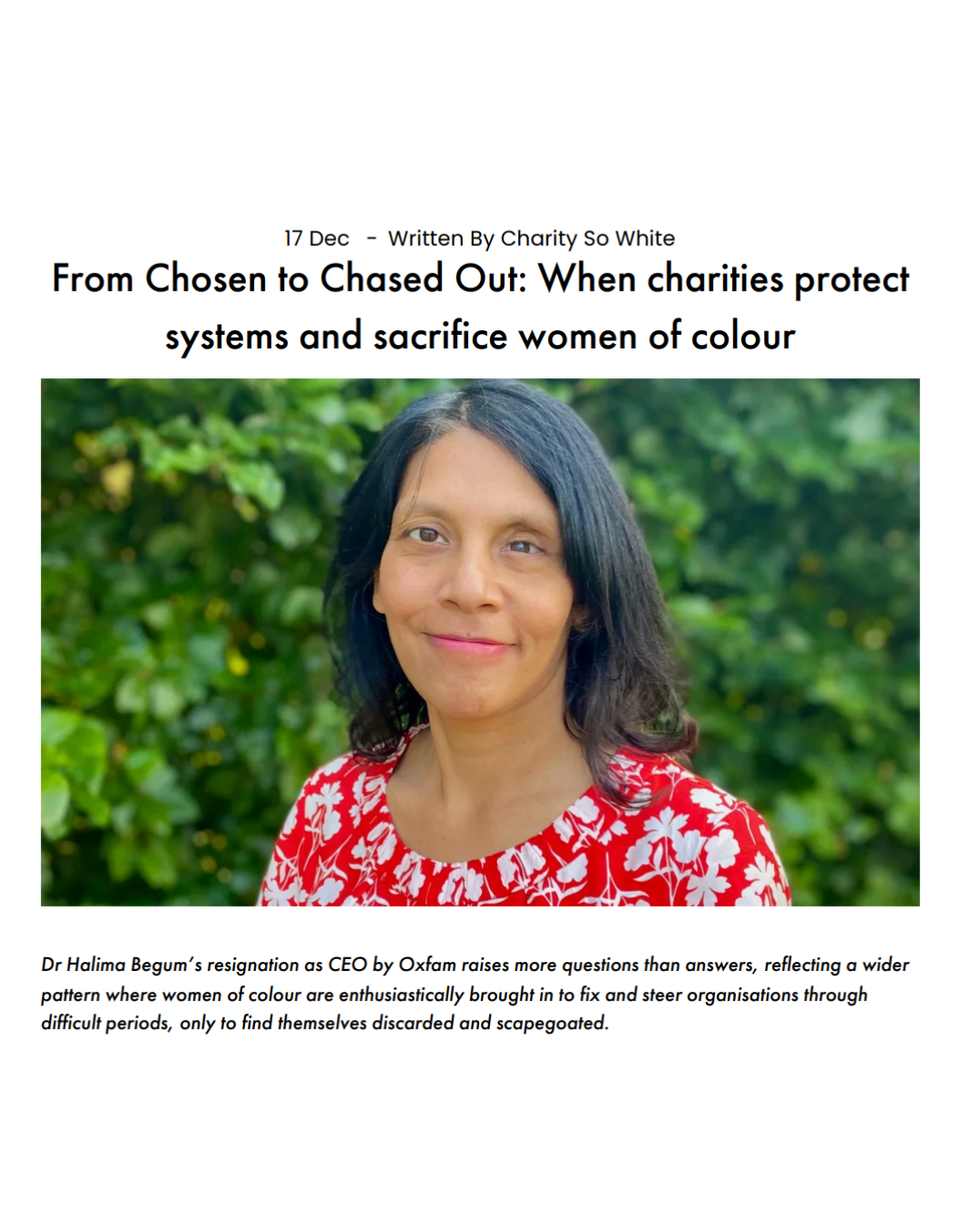
Oxfam GB had a documented history of workplace problems before Dr Halima Begum became involved. An earlier review had already found racism, sexism and what it called "colonial behaviour" embedded in the organisation's culture.
Begum arrived in 2024 as CEO, into a budget crisis. As a woman of colour leading through that crisis, existing tensions were amplified. One staff member told the BBC that the organisation "preached racial justice publicly but couldn't practice it internally."
A Budget Crisis, Inherited
The board asked her to fix the budget shortfall — which meant cutting 250 jobs out of 2,100 staff. Many staff felt traumatised and poorly consulted, and directed their frustration at Begum, while the board's own endorsement of the plan drew far less scrutiny.
Over 100 staff signed letters criticising senior leadership and the restructuring. The board selectively used those letters to target Begum specifically — despite the crisis, and the plan to address it, predating her arrival.
Two Very Different Accounts
Some staff described Begum as bullying, unpredictable and prone to interfering in safeguarding investigations — an independent review of testimony from 32 colleagues backed up parts of this account.
Others saw it differently: an organisation had brought in a woman of colour, asked her to carry out the hardest restructuring in its history, and was now scapegoating her while the board itself avoided scrutiny.
Begum's own whistleblowing complaint about racism and sexism at Oxfam complicated the story further, making her both the accused and, in her account, the person raising the alarm.
Bully or Bullied?
Begum's lawyers say she faced "hostile, victimising, discriminatory conduct," and she has filed a claim for constructive dismissal after raising concerns about racism and sexism internally.
So the question the case leaves hanging is simple to ask and hard to answer: is she the bully, or the bullied? The problem, or the symptom? By most accounts, the honest answer is that it depends who you ask — and that dependence is itself the real problem.
A Fractured Board
The board chair and Begum reportedly clashed, and trustees disagreed publicly about how to handle the racism complaints — signs of an organisation fractured from the top down.
Rather than examining its own failures, the board's investigation focused on one person — who happened to be a woman of colour. In an organisation that has built its public identity around fighting for racial justice, that's a hard irony to sit with.
It's a pattern that shows up well beyond Oxfam: nonprofits that build their brand on equity, dignity and "decolonising" systems, while internally reproducing the same hierarchies they campaign against.
More Than One Bad CEO, or One Bad Board
What the Oxfam case really exposes isn't a single villain. It's an organisation that struggled to hold itself accountable for systemic racism while investigating individuals, to let its leadership be diverse without making that diversity itself the issue, and to address real power imbalances without weaponising identity in the process.
Nonprofit work culture will keep failing people as long as "mission" gets used as an excuse. No cause is good enough to justify an unsafe or unfair workplace.
WokeOnPaper is an independent satire media collective led by a small group of development practitioners. Through memes, stories and commentary, it reflects on the everyday absurdities of the social sector — nudging it towards becoming more honest, participatory and democratic.